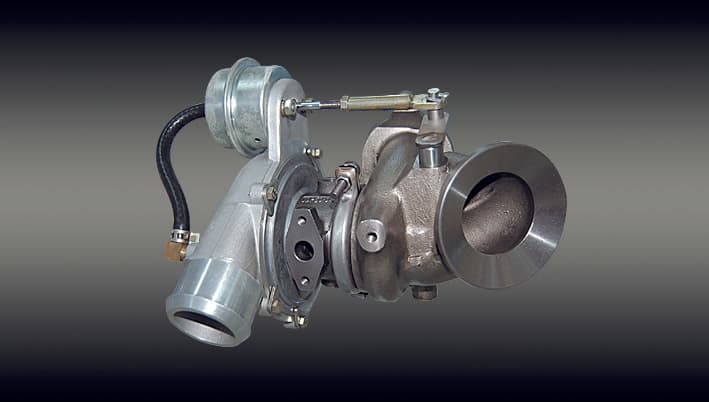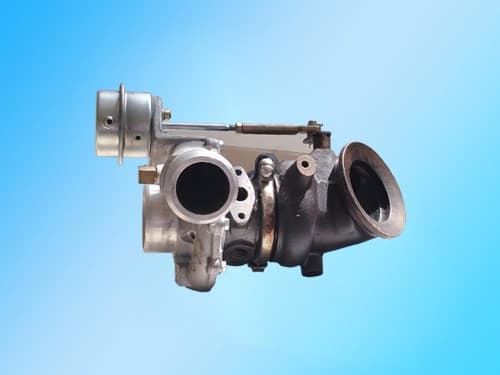
In an age that pursues efficiency, turbocharging has become a symbol of efficiency and technology. More and more automakers are launching turbocharged models. Advanced turbocharged engine technology increases the mass of air entering the combustion chamber so that the gasoline burns more completely, which raises power output. But as a turbocharged engine delivers more power, the peak cylinder pressure and average temperature during operation also rise considerably. A turbocharged engine therefore demands more of its owner in terms of maintenance.
How does the operating environment of a turbocharged engine differ from that of a naturally aspirated one?
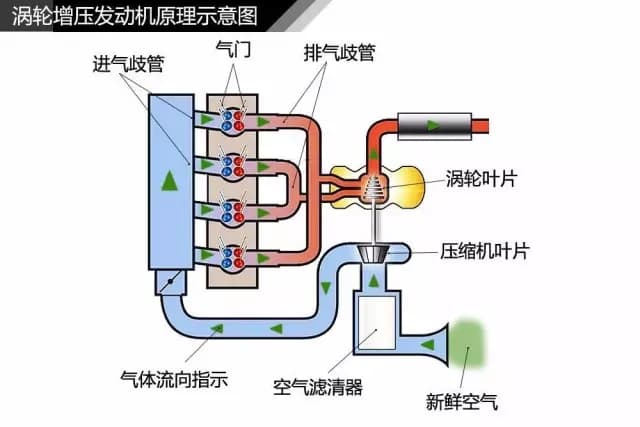
A turbocharger is often referred to simply as a turbo or T. Turbocharging uses the engine's exhaust gas to drive a turbine that compresses the intake air, which raises engine power and torque and makes the car more powerful.
A turbocharger consists mainly of a turbine and a compressor connected by a shaft. The turbine inlet is connected to the engine exhaust manifold and its outlet to the exhaust pipe; the compressor inlet is connected to the intake pipe and its outlet to the intake manifold. The exhaust gas leaving the engine drives the turbine at high speed, which in turn drives the compressor on the same shaft at high speed and forces the compressed air into the cylinders.
A turbocharged engine differs from an ordinary naturally aspirated engine in speed and temperature. Speed here means mainly the speed of the turbine shaft and bearings, which can exceed 100,000 rpm at full load. At such extremely high speeds the bearings in the bearing housing must be fully lubricated. Most premature turbocharger failures are caused by severe wear of these bearings, which shows up as heavy oil consumption, a marked loss of power and similar symptoms.
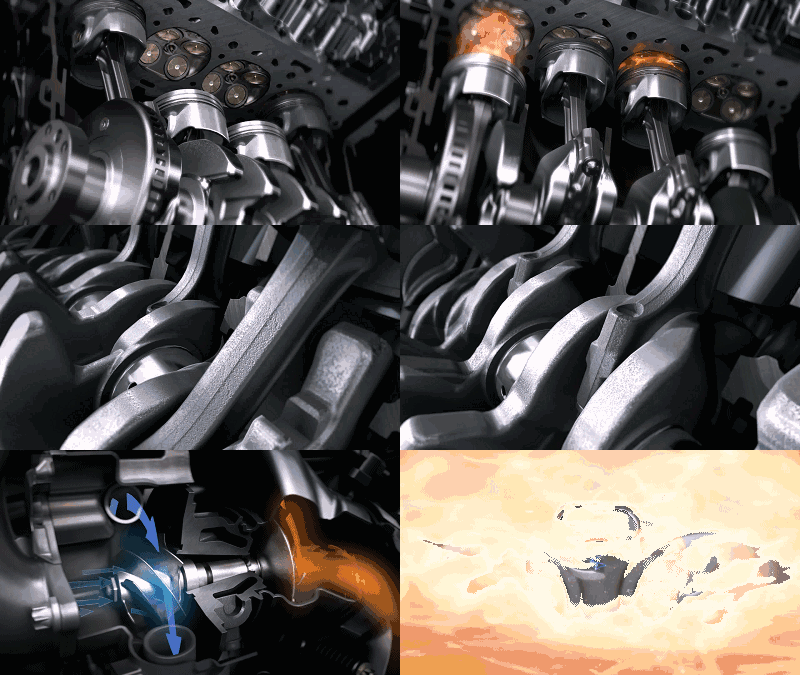
As for temperature, a turbocharger can operate at up to a thousand degrees or more, which places very severe demands on the high-temperature properties of the engine oil. The oil temperature in an ordinary naturally aspirated engine rarely exceeds 100 degrees and is typically a little over 90. In a turbocharged engine, however, the oil temperature easily exceeds 110 degrees and in some cases reaches 120 degrees. This operating environment and these characteristics lead to some specific requirements for the choice of engine oil.
What does a turbocharged engine require of its engine oil?
1. Viscosity–temperature characteristics
2. Low-temperature fluidity
3. High-temperature resistance
4. Oxidation resistance
5. Shear resistance
At high temperatures, mineral oil readily forms sludge and carbon deposits, which harm both the elasticity of the oil-seal lips and the cooling of the turbocharger. The physical properties of a high-quality fully synthetic oil are stable and change very little at high temperature, so it still lubricates well when hot.

Oxidation resistance determines the durability of the oil. At high temperature and pressure, the compounds in the oil oxidize faster. After a certain mileage (time) the oil's performance declines noticeably, whereas a high-quality fully synthetic oil still lubricates well after 8,000 km of driving.