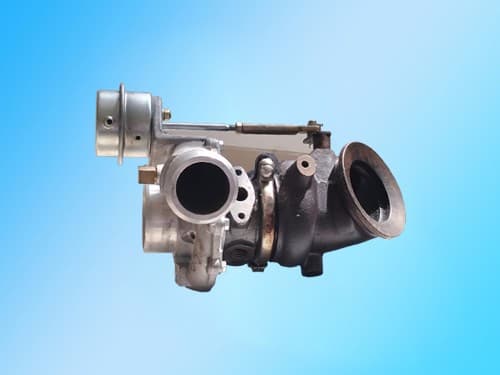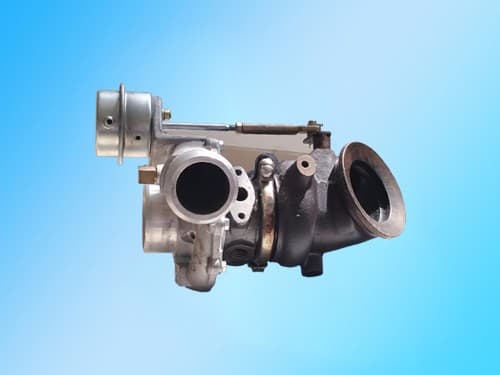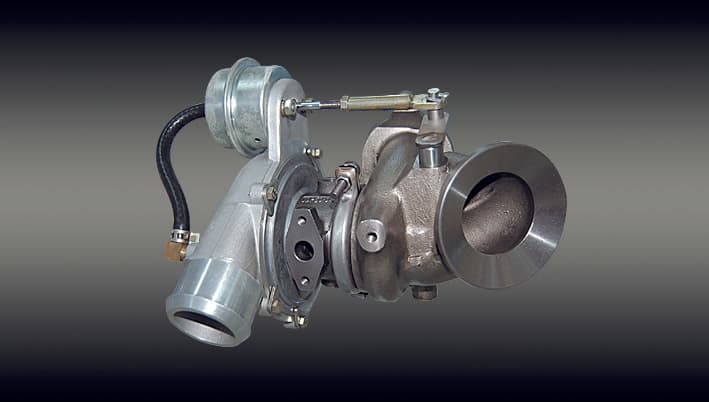
"The turbocharged gasoline engine has become the mainstream choice in the passenger-car market, and turbocharging has changed from an optional technology for gasoline engines into an essential one." This is the assessment of Zhao Fucheng, Vice President of the Geely Automobile Powertrain Research Institute.
Turbocharged engines continue to develop along the downsizing route. At the same time, the associated intake, exhaust and related technologies keep advancing and changing. The strongest driver of the widespread use of turbocharging is strict fuel consumption regulation. Gasoline engines built on turbocharging as their base technology platform have taken over the market. The advantages of the turbocharged engine are higher fuel efficiency, faster response and lower pumping and mechanical losses. Zou Bowen, Deputy Director of the National Gas Vehicle Engineering Technology Research Center at the China Automotive Engineering Research Institute, pointed out: "Conventional naturally aspirated engines struggle to cope with tighter regulations and higher market demands. Turbocharging allows a small-displacement engine to deliver the same power as a large-displacement engine while reducing pumping and mechanical losses, so it balances power and fuel economy better."
Technical improvement of turbocharged engines focuses mainly on higher fuel efficiency and thermal efficiency and faster engine response. "In the market for engines below 1.5 L, downsized three-cylinder turbocharged engines are becoming more common. For four-cylinder engines, twin-scroll turbochargers will be used more and more widely," said Zhao Fucheng. Twin-scroll technology can greatly improve an engine's charging efficiency.
Zhao Fucheng also pointed out that electrically driven turbochargers are maturing and are ready for volume production. Hybrid technology, especially 48 V mild-hybrid technology, provides a strong platform for them, and they will become a new direction for turbocharger technology. This technology effectively improves the low-speed power and response of a turbocharged engine without increasing fuel consumption or impairing starting performance as a mechanical supercharger does.
When engine manufacturers develop turbocharged models, they will give more consideration to how well the engine adapts to different operating conditions and customer requirements. Zhao Fucheng said that different types of turbocharger and related technologies can be used to meet the matching needs of different customers. Some new turbocharged engines are being developed to meet the needs of hybrid systems as well as conventional powertrains, which can greatly reduce engine manufacturers' development costs.
"The market for gasoline-engine turbochargers has already grown large," said Zhao Fucheng. Zhang Aiming agreed. Zou Bowen predicted: "As China's emission standards are raised further, turbocharging technology will spread and develop even faster."
Chinese turbocharger companies should form a development, application and testing community with vehicle manufacturers, research institutions and third-party test organizations, and adopt a strategy of "simultaneous development, step-by-step application". Zou Bowen explained: "Chinese companies should start with component material matching and structural design optimization, turbocharger matching, testing and evaluation, and cost control, in order to improve product reliability and enter the market quickly with a low-cost advantage. At the same time, they should speed up the development of advanced technologies such as electrically driven turbochargers, concentrate on overcoming intellectual-property barriers, control costs strictly and gradually enlarge the market share of advanced turbocharger products."
The progress of Chinese gasoline-engine turbochargers deserves recognition, but there are still problems that cannot be ignored. Zou Bowen identified several key issues: a single turbocharging technology route, outdated turbine performance analysis and matching techniques, limited turbocharger test and validation capability, insufficient product technology in the turbochargers themselves, and electric boosting products that have yet to be developed. Zhang Aiming stressed: "Compared with foreign-invested companies, Chinese companies still lag far behind in turbocharging technology. The main reason is that engine emission technology abroad has advanced several steps faster than in China, and Chinese companies have accumulated less original data than foreign-invested ones. Chinese engine manufacturers must combine theory with practice and plan for the long term. To narrow the gap, Chinese companies need to avoid impatience and build up data on the basis of rapid innovation."